

History
1893 – 1897
Discovery and excavation of kaolinized feldspar sand by the Kahla porcelain factory and the mill owner Melzer from Grosseutersdorf.


In the south-eastern and south-western areas of the mountain two independent subterranean sites are excavated.
The two sites lie on a north-south axis and consist of various 70 meters to 220 meters long tunnels, around 3.5 meters wide and 4 meters high.
1943
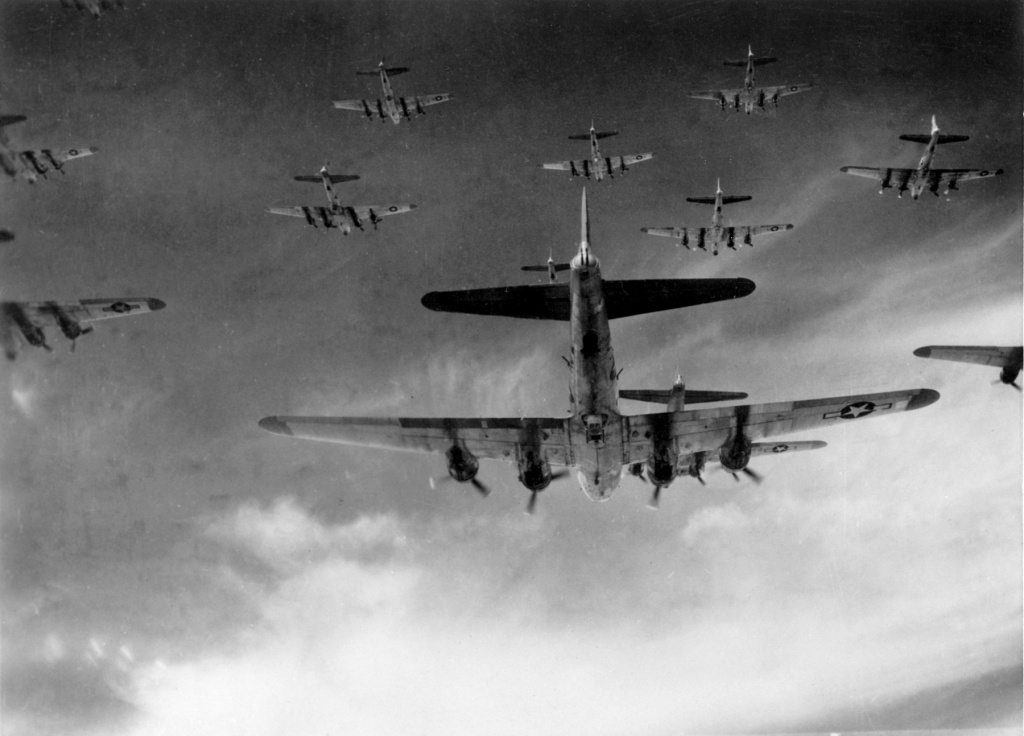
Continued strategic area bombing by the British Royal Air Force and the American USAAF on German cities and military industrial complexes force the Reichswirtschaftsministerium to act.
1944
Adolf Hitler orders the transfer of important war production into subterranean facilities.

The Thuringian area has an important role in the war, due to its location, military infrastructure, and the existing mines and tunnel systems.

Of the 41 facilities registered, the Walpersberg had the best conditions for an underground production installation.
Expropriation of the Kahlaer and Melzer sand quarry by the Reichs Ministry of Armaments and War production.
The sand quarry in Kahla has at this time a total mining surface of 10,000 m²
Through the initiative of the Gauleiter of Thuringia, Fritz Sauckel and Hermann Göring, Reichsmarshall of the German air force, the “REIMAHG” is founded.

The “REIMAHG” is a part of the National-Socialist industrial organisation “Gustloff-Werke” in Weimar.
Its purpose is the mass production of the Me262 jet fighter.


11. April 1944
April, 11th – Construction in and around the Walpersberg Mountain starts with participation from over 100 companies.


At the same time 10 main camps and 18 sub-camps are created, where until the end of the war 15,000 people will be drawn from all over Europe.
Fritz Sauckel, Nazi plenipotentiary-general for labor mobilization, organises the necessary laborers.


Forced laborers, prisoners of war and civilian employees from thirteen different countries are recruited, as well as Germans that were obliged to work, and boys and girls of the Hitler Youth and Bund Deutscher Mädel (League of German girls).


In April construction starts and the first forced labourers from Italy arrive.

By November their numbers will rise to 12,000.

None of the camps were completely finished by the end of the war.


August 44 – April 45
August `44 until April `45 – Allied aerial reconnaissance by the ACIU (Allied Central Interpretation Unit )


The factory and its role are discovered by Constance Babington-Smith, who works in Medmenham, England at the Allied Aerial Central Interpretation Unit.


January 1945
The following construction has been achieved:
“REIMAHG” hospital in the Hummelshain Castle with four major sick barracks in the castle park
Shipping station with railway connection towards Orlamünde
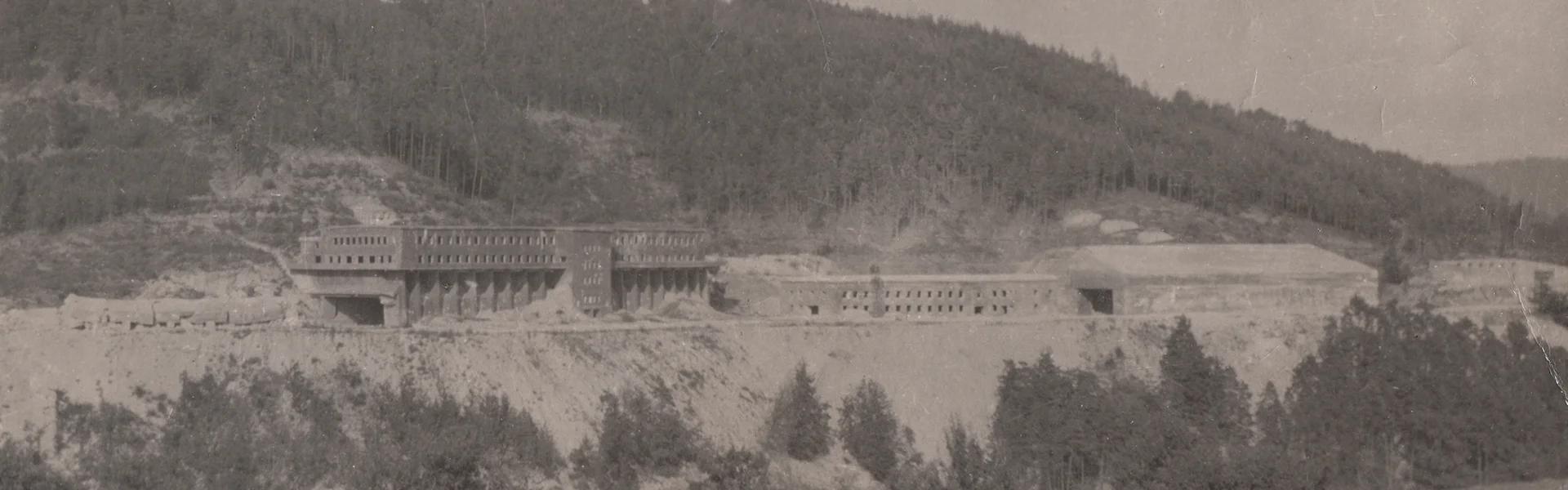
40 tunnels each 400m long, used as working areas
75 tunnels, total length 15 km
7 main entrances
2 assembly halls, 100m x 30m
4 major steel concrete bunkers, 100m x 20m
5 large wooden sheds, 100m x 20m
The runway, 1100m x 33m, on top of the mountain with an elevator transport system for the aircraft.
February 1945
February 21st – the first take-off by a Me 262, start of the production of other Me 262 jet aircraft starts. The total of assembled aircraft lies between 20-26 aircraft.

Production is partially done in the subterranean factory, the so-called “Stelle 0”. All other underground construction is still underway.


April 1945
The US 89th Infantry Division, a unit of the US Third Army, commanded by General Patton, enters in Thuringia.

The remaining forced labourers are registered, taken care of and repatriated. Special allied units, like CIOS and USSTAF inspect the “REIMAHG”.


The factory and surrounding camps are guarded by the Belgian 16th Fusilier Battalion.

July 1945
The Soviet military administration in Thuringia under the command of General Tschuikow, takes over the region.

1946 – 1952
The Soviet army confiscates all assets of the “REIMAHG” and starts disassembly of the installation. All equipment is transported by rail towards the Soviet-Union. The disassembly is followed by a systematic destruction of all external buildings, main entrances to the mountain, runway and subterranean areas.

1953 – 1974
Some of the tunnels are reutilised as storage for potatoes and by the East-German drill core archive.

1965
Construction and inauguration of a memorial site on the former “REIMAHG” area.
On a yearly basis, commemorations for the victims and survivors of the factory take place.


1974
Demolition of the old memorial and inauguration of a new memorial site in the Leubengrund near Kahla.
Extension and opening of a part of the subterranean area by the National People`s Army of the German Democratic Republic.


1990 – 1998
Due to the German reunification, the Bundeswehr takes over the area until the closure of the depot. The former military area is given to the financial department in Erfurt.

2003
The association “REIMAHG” e.V. , later changed to Förderverein „Mahn- und Gedenkstätte Walpersberg“ e.V. is founded. After 29 years of absence, the commemoration takes place again at the Walpersberg site, organized by our association.

2004
With major international participation the second commemoration takes place. Commemorative plaques are inaugurated and the tunnels are open for the public.


A large evening event with all participating countries takes place in the “Rosengarten”, Kahla.


2005
Ambassadors, Consuls and a large number of international guests come from Italy, Belgium, Poland, the Netherlands, Belarus, Germany, Chile, USA and the UK participate at this special event.
2006
Beginning of May the ceremony takes place at the Walpersberg.
Several survivors receive an honorary citizenship of the town of Kahla.


“Open Door” at the Walpersberg.


The monument in the Hummelshain Castle park is renovated and inaugurated.


Evening celebration in Kleindembach.


2007
Destruction and theft of several commemorative plaques at the Walpersberg

Evening ceremony at the Walpersberg


The site at the Walpersberg is sold to a private owner.
Commemorative plaques at the wall of the former Bunker 1 .
Shortly after we received news of the sale of the site, we asked the Oberfinanzdirektion in Erfurt to allow us to remove the commemorative plaques that had been received and installed by our association, in order to install them at another location. This was refused.


Despite the fact that the site has been sold to a private owner, our association continues to work and research, on an international level, around the history of this location. For more information, go to Activities of the Association.